
Quick answer: Yes, oxidation can usually be removed from car paint, as long as the damage hasn’t gone past the top layer. Wash and decontaminate the paint, machine-polish it with the gentlest compound that works, then seal it with wax or sealant. If the clear coat is peeling, flaking or cracking, polishing won’t fix it and the panel needs repainting.
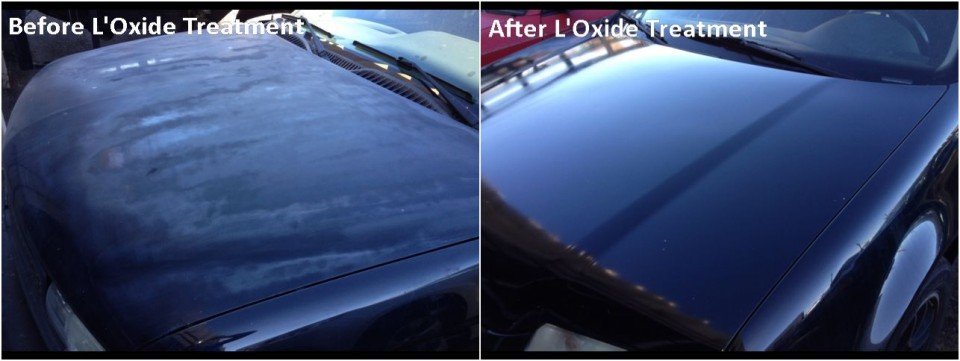
Somewhere between a car’s third summer and its tenth, the paint starts to look tired. Red turns pink. Black turns gray. The hood stops reflecting the sky and reflects nothing at all. That flat, chalky look is oxidation, and the good news is that it’s often reversible.
The less good news is that the right fix depends on what kind of paint you have and how far the damage has gone. Pick the wrong method and a weekend project can turn into a repaint. This guide shows you how to tell the difference, how to fix it properly, what the popular shortcuts really do, and when it makes sense to hand the job to a professional.
The short version
- Oxidation is surface damage, and polishing removes it. Clear coat failure is deeper damage, and polishing can’t.
- A clay bar cleans paint but doesn’t remove oxidation. Compounds and polishes do.
- Vinegar, baking soda and toothpaste are not safe shortcuts.
- Sandpaper is a last resort, in the 2000 to 3000 grit range, and is best left to a professional.
- Wax or sealant afterward isn’t optional. Unprotected paint oxidizes again quickly.
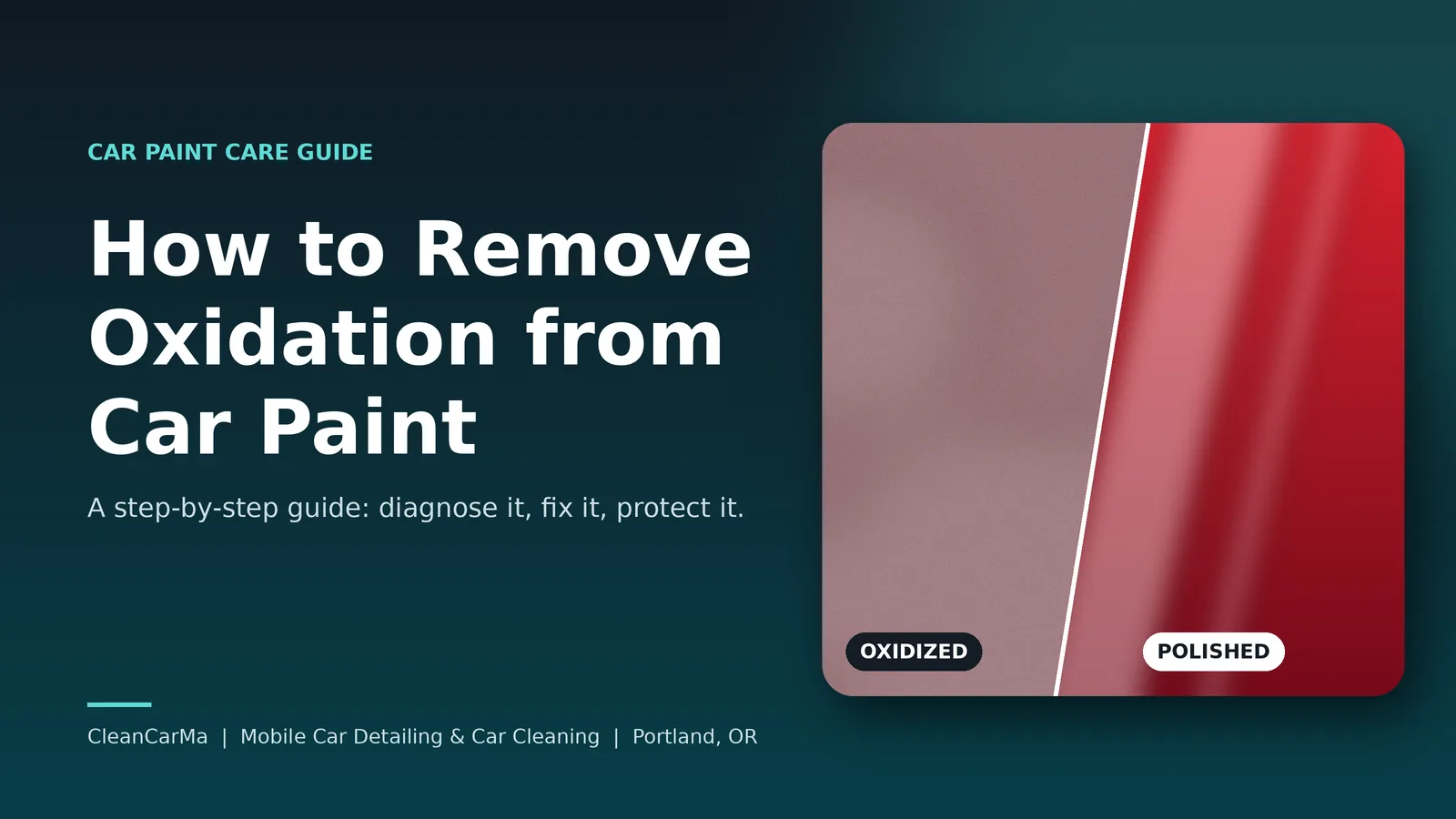
What is oxidation on car paint?
Oxidation is the slow breakdown of paint when oxygen, ultraviolet (UV) light and heat attack it. The resin that holds the paint together degrades, and a dull, chalky layer of damaged paint and loose pigment builds up on the surface. Think of it as a sunburn for your car.
Most modern cars wear paint in layers: primer, a colored base coat and a transparent clear coat on top. The clear coat takes most of the abuse. Older cars, many work trucks and some classics have single-stage paint, where color and gloss share one layer with no clear coat over it. With nothing shielding the pigment, single-stage paint oxidizes far more easily.
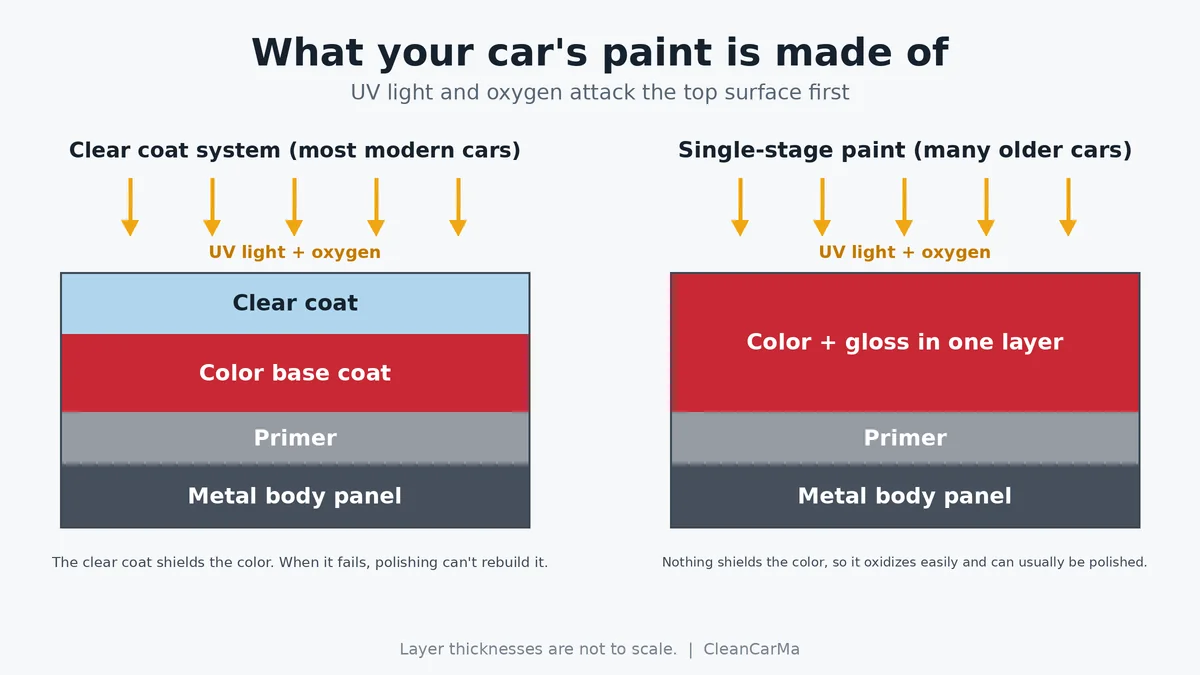
What causes paint oxidation on a car?
Oxidation is rarely one big event. It’s everyday exposure adding up, and these are the usual suspects:
- Sunlight (UV). UV light breaks down paint resin. Horizontal panels such as the roof, hood and trunk lid get the most.
- Heat. Warmth speeds up the chemical reactions, which is one reason dark cars often show it first.
- Missing protection. Wax and sealant work like sunscreen. Once they wear off and aren’t replaced, the paint takes every hit directly.
- Bird droppings, tree sap and bug splatter. They’re acidic or sticky and can etch the paint if they sit.
- Pollution, road salt and mineral deposits. These leave a film that dulls the surface and makes it easier to damage.
- Harsh cleaners and rough tools. Dish soap strips protection, and gritty towels or stiff brushes scratch the clear coat.
- Paint type and age. Single-stage paint and some older finishes oxidize faster than a healthy factory clear coat.
What does oxidized car paint look like?
Oxidized paint looks dull, faded and chalky, and it’s usually worst on the roof, hood and trunk lid. Color loses depth: red drifts toward pink, black toward gray, and the surface stops giving a clear reflection.
Here’s what to look for:
- A flat, hazy shine even right after a wash
- Faded or patchy color, often lighter on top-facing panels than on the doors
- A powdery residue on your hand or a towel when you wipe the paint
- A dry, slightly rough feel
- Water that no longer beads, which tells you the protection has worn away
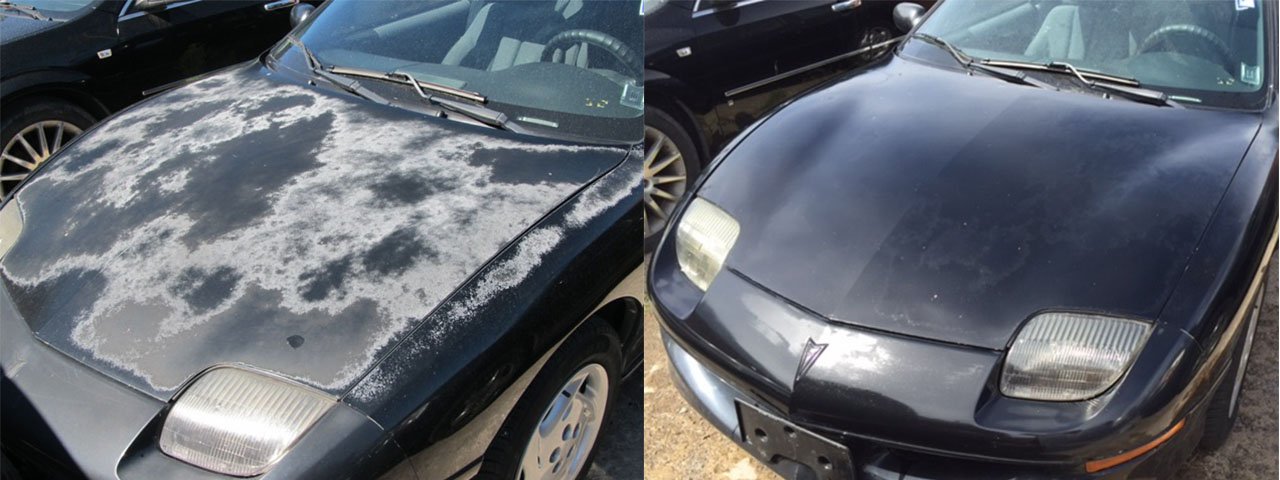
Is it oxidation or clear coat failure?
This is the question most guides skip, and it decides everything. Oxidation is a surface problem you can polish out. Clear coat failure means the transparent top layer itself is breaking down, and polishing can’t bring it back.
| Oxidation | Clear coat failure | |
|---|---|---|
| What it looks like | Dull, faded and chalky, fairly even across the panel | Cloudy or whitish patches that spread, later peeling, flaking or cracking |
| What it feels like | Dry, slightly rough or powdery | Rough and uneven, with lifting edges |
| Gentle polish test | Color or powder on a white towel (typical of single-stage paint) | Usually little color transfer, unless the clear has worn through to the color coat |
| Can polishing fix it? | Usually yes | No. The panel needs sanding and repainting |
| Most common on | Single-stage paint, older cars, neglected finishes | Factory clear coat after years of strong sun |
A two-minute test. Wash and dry a small spot. Put a little fine polish on a white microfiber towel and rub an area about the size of your hand. If the towel picks up color and the paint underneath looks glossier, you’re most likely dealing with oxidation on single-stage paint. If you see peeling, flaking or cloudy patches that look like a layer lifting, stop. That’s clear coat failure, and more rubbing will only make it worse.
[IMG-04: oxidation versus clear coat failure, side by side]
How bad is it? A quick severity guide
The amount of damage decides the method. Start with the gentlest option that matches what you see.
| Severity | What you see | What usually works | DIY or pro |
|---|---|---|---|
| Light | Slight dullness, color still rich, shine comes back when the panel is wet | Clay bar if the paint feels rough, finishing polish, then wax or sealant | DIY-friendly, by hand or with a dual-action polisher |
| Moderate | Clearly faded, chalky feel, powder on the towel | Medium-cut compound, then finishing polish, then sealant | DIY with a dual-action polisher and patience, or a pro |
| Heavy | Very chalky and faded, a lot of color on the pad, rough surface | Multi-step compounding, sometimes wet sanding first | Best left to a pro |
| Clear coat failure | Peeling, flaking, cracking or cloudy patches | No polish fixes it. Repaint the affected panel | Body shop |
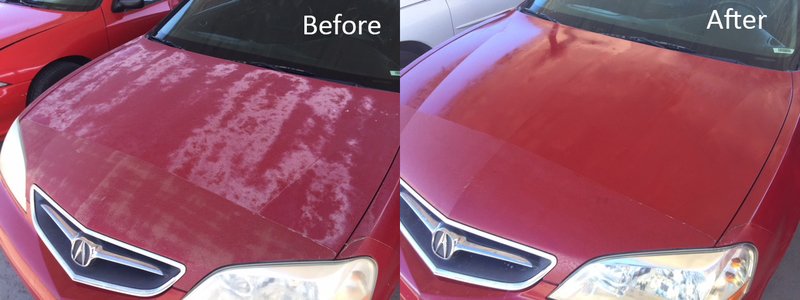
How to remove oxidation from car paint, step by step
The reliable method is to wash, decontaminate, test a small spot, machine-polish in small sections, refine, then protect. Give yourself half a day to a full day for a whole car if it’s your first time.
What you’ll need: pH-neutral car wash soap, two buckets and a wash mitt, a clay bar or clay mitt with lubricant, plenty of clean microfiber towels, painter’s tape, a dual-action polisher (more forgiving than a rotary for beginners), foam polishing pads, a medium-cut compound, a finishing polish, a bright light, an isopropyl alcohol panel wipe, and a wax or sealant. A paint thickness gauge is optional but very useful.
- Work in the shade on cool paint. Polish dries too fast on hot panels and leaves streaks. If you can’t touch the paint comfortably, wait.
- Wash with the two-bucket method. Use one bucket for soapy water and one for rinsing your mitt, so grit stays off the paint. Rinse well and dry with a clean microfiber towel. It’s the same principle behind our foamy shampoo wash.
- Decontaminate the paint. Glide a clay bar or clay mitt over lubricated paint until it feels glass-smooth. This lifts bonded grit and fallout that a polishing pad would otherwise drag across the finish. Clay doesn’t remove oxidation itself; it just clears the way.
- Tape and inspect. Mask rubber trim, badges and plastic. Stay gentle around edges and body lines, where paint is thinnest. If you have a thickness gauge, compare readings across the car. A panel that reads much lower than the rest has probably been polished or repainted before, so go easy there.
- Do a test spot. Pick a 2 by 2 foot patch and start with the least aggressive combination, such as a finishing polish on a soft foam pad. If oxidation is still there after a couple of passes, step up to a medium-cut compound or a firmer pad. Judge the result under bright light.
- Polish in small sections. Work 2 by 2 feet at a time. Prime the pad with three or four pea-sized dots, spread the product at low speed, then use moderate speed with overlapping passes, side to side and then up and down, using light pressure and keeping the pad flat. Wipe the residue with a clean microfiber and check your work before moving on. On single-stage paint, color on the pad is normal; swap in a fresh pad often.
- Refine the finish. Compounding can leave a slight haze. A finishing polish on a soft pad brings back depth and clarity.
- Wipe the panel down. A diluted isopropyl alcohol wipe (follow the label) removes polishing oils so you can see the true result and the protection bonds properly.
- Protect the paint. Apply wax or sealant in thin, even coats and buff off with a clean towel. Carnauba wax gives a warm gloss but wears in weeks to a few months. Sealants typically last longer, and ceramic coatings can last years when applied correctly.
[IMG-05: clay bar on lubricated paint]
Mistakes that cause the most damage
- Pressing hard or staying in one spot, which can burn through clear coat
- Polishing hot panels or in direct sun
- Skipping the wash and clay, so grit gets ground into the paint
- Going straight to the most aggressive compound
- Working over edges, ridges and body lines
- Reusing a towel or pad that touched the ground
[IMG-07: paint thickness gauge reading on a hood]
Do clay bars, rubbing compound and sandpaper remove oxidation?
These three get mixed up constantly. They do very different jobs.
Will a clay bar remove oxidation?
No. A clay bar pulls bonded contaminants such as tar, industrial fallout and overspray off the surface. Oxidation is damaged paint, not something sitting on top of it. Use clay to prepare the paint, then use polish or compound to remove the oxidized layer.
Will rubbing compound remove oxidation?
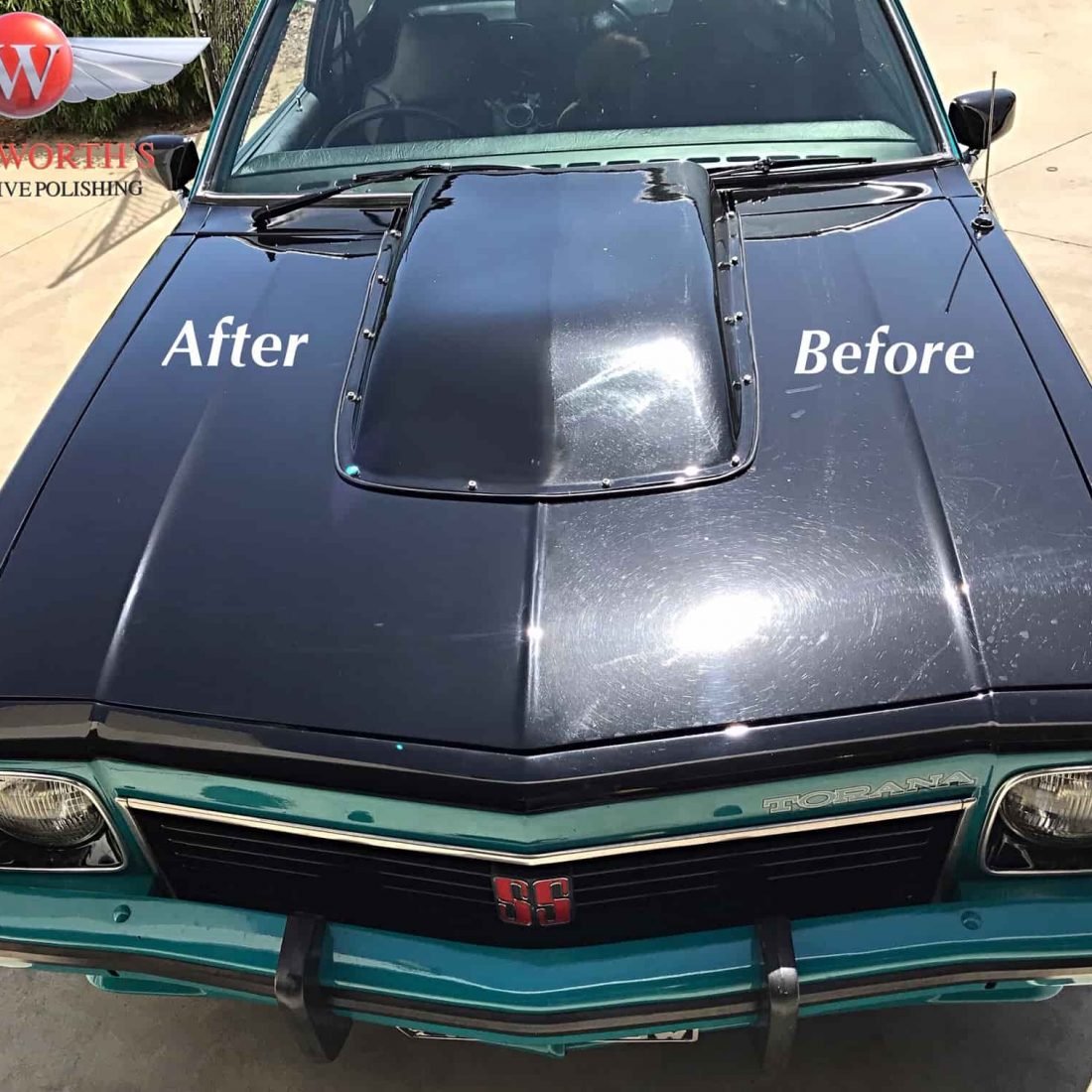
Yes, it can, but it’s the blunt tool. Compounds contain abrasives that shave off a very thin layer of damaged paint to reveal fresher paint underneath. That works on moderate to heavy oxidation, but a strong compound can leave haze and fine scratches, so it should always be followed by a finishing polish and a layer of protection. Start with a polish. Reach for compound only if the polish can’t cut it.
What grit sandpaper removes oxidation?
For most oxidation, none. Polishing is safer and almost always enough. Wet sanding removes paint, not just oxidation, and factory clear coat is often only about 1.5 to 2.5 mils thick (roughly 40 to 60 microns). When wet sanding is justified, such as heavy oxidation on thick single-stage paint, professionals typically stay in the 2000 to 3000 grit range and then compound and polish to remove the sanding marks. Anything much coarser than 1500 grit puts the paint at serious risk. Treat this as a job for someone who owns a thickness gauge.
Do home remedies like vinegar and baking soda work?
Not safely. Some sites recommend them, and it’s easy to see why: they’re cheap and already in the kitchen. Anything abrasive will remove a thin layer of damaged paint, so rubbing a patch with baking soda or toothpaste can look better for a minute. What you’ve actually done is sand the surface unevenly with grit you can’t control.
| Home remedy | What it really does | Verdict |
|---|---|---|
| White vinegar | A mild acid. It can loosen mineral spots, but it doesn’t polish away oxidation, and it can strip wax and sealant or dull the finish if it dries on the paint | Skip |
| Baking soda paste | Gritty crystals of uneven size that scrub unevenly and can leave scratches and haze, especially on clear coat | Avoid |
| Whitening toothpaste | An abrasive made for tooth enamel, not paint. Results are unpredictable | Avoid |
| Melamine “magic eraser” sponge | Behaves like very fine sandpaper | Avoid |
| Dish soap | Strips wax and sealant and leaves the paint exposed | Use car shampoo instead |
If you want a low-cost route, hand-polish a small area with a quality polish and a foam applicator pad. It’s slower than a machine, but it’s controlled, and the abrasives are designed for paint.
When should you call a professional?
Hand the job to a pro if any of these sound familiar:
- The paint is black, dark or soft, and shows every tiny mark (see our guide to detailing a sports car for how show-quality finishes are handled)
- It’s single-stage metallic paint, which is harder to get even
- The paint is thin, has been polished before, or the panel was repainted
- The oxidation is heavy and the pad is loading up with color
- The car matters to you financially, such as a lease return or a resale
- You don’t have shade, a dual-action polisher or a free day
Also know where detailing ends. If the clear coat is peeling or cracking, you need a body shop, and an honest detailer will tell you that rather than sell you a polish that won’t last.
Professional paint restoration usually starts with a 2 step paint correction, which removes oxidation in two measured stages, and finishes with protection from one of our detailing packages. Wondering what it costs? Our guide to car detailing prices explains what drives the price.
If you’re in the Portland area and would rather not risk your paint, CleanCarMa’s mobile car detailing comes to your home or workplace, so there’s no dropping the car off or waiting around. When you compare detailers, ask which paint type they think you have, whether they measure paint thickness, and what protection they’ll finish with.
[IMG-10: mobile detailing in progress in a Portland driveway]
How do you keep oxidation from coming back?
Keep the paint clean, covered and protected. Oxidation is much easier to prevent than to polish out, and the routine is simple. Our exterior detailing service covers the wash, decontamination and protection steps if you’d rather not do them yourself.
| Task | How often | Why it matters |
|---|---|---|
| Wash with the two-bucket method and a soft mitt | Every one to two weeks | Removes grit and pollution before they bond to the paint |
| Remove bird droppings, tree sap and bug splatter | As soon as you spot them | Acids and sticky residue can etch the clear coat quickly |
| Apply wax | About every three to four months | Acts as sunscreen and keeps water beading |
| Apply sealant or ceramic coating | Follow the product label or installer’s guidance | Longer-lasting protection against UV and contamination |
| Park in a garage or carport, or use a breathable cover | Whenever you can | Cuts UV and heat exposure |
| Avoid dish soap, stiff brushes and gritty towels | Always | Protects both the wax layer and the clear coat |
[IMG-08: water beading on freshly protected paint]
Does Portland’s weather make oxidation worse?
Not by itself, but the mix of conditions here shapes how you should care for your paint. Portland isn’t a desert, so you won’t see the extreme sun damage common in hotter states. Instead, the paint gets worn down by a few different things across the year:
- The wet season. From roughly October through May, constant moisture and road spray wear protection down and leave grime on the paint.
- Dry summer sun. July through September brings strong, steady UV that hits the hood, roof and trunk lid hardest.
- Street trees. Sap, sticky honeydew, leaves, needles and spring pollen settle on cars parked outside, and they’re tougher to remove the longer they bake on.
- Birds. Droppings are acidic, and sun and heat make them harder to lift.
A practical rhythm is to put fresh wax or sealant on before the rain settles in and again in spring, and to rinse off sap and droppings quickly. If you park outside under trees, a breathable cover helps. Polishing also needs shade and cool panels, and Portland drizzle shrinks the number of good outdoor days, so a garage, carport or covered driveway is a real advantage. If you don’t have one, mention it when you book a visit and we’ll plan around it.
We bring mobile detailing to Portland and nearby areas including Beaverton, Hillsboro, Lake Oswego, Gresham, Milwaukie and Vancouver.
[IMG-09: car parked under street trees with sap and leaf debris on the paint]
Frequently asked questions about removing oxidation from car paint
Can oxidation be removed from car paint?
Yes, when the damage is still in the top layer of paint. Polishing or compounding removes the oxidized layer and reveals healthy paint underneath. If the clear coat is peeling, cracking or flaking, that’s clear coat failure, and the panel needs to be repainted instead.
Can you remove oxidation from a car?
Yes. Wash the car, clay it, machine-polish with the least aggressive product that works, and finish with wax or sealant. Light oxidation is a manageable DIY job. Heavy oxidation, dark paint or thin paint is safer in a professional’s hands.
Will a clay bar remove oxidation?
No. A clay bar removes bonded contaminants like tar and fallout, not oxidized paint. Use it before polishing so the pad doesn’t drag grit across the surface, then use polish or compound to remove the oxidation itself.
What causes paint oxidation on a car?
UV light, heat and oxygen break down the paint’s resin over time. Missing wax, bird droppings, tree sap, pollution and harsh cleaners speed it up. Single-stage paint, which has no clear coat, oxidizes fastest.
Will rubbing compound remove oxidation?
Yes, it can, because it shaves away a thin layer of damaged paint. It’s aggressive, though, so try a polish first, step up only if needed, and follow compound with a finishing polish and wax or sealant to restore gloss and protect the surface.
What are some homemade ways to remove oxidation from paint?
People try vinegar, baking soda and toothpaste, but none are safe or effective. They either do nothing or scrub unevenly with abrasives you can’t control. A proper polish applied by hand is a far safer budget option.
How do you restore oxidized car paint?
Work in the shade on cool paint. Wash with two buckets, clay the surface, tape the trim, test a small spot, polish in 2 by 2 foot sections, refine with a finishing polish, wipe the panel down, then apply wax or sealant.
What does oxidation on a car look like?
Dull, faded and chalky paint, usually worst on the roof, hood and trunk lid. Red often turns pinkish and black turns gray. You may see chalky powder on a towel when you wipe the surface.
Will vinegar take off oxidation?
No. Vinegar is a mild acid, not a polish. It may lift mineral spots, but it can strip wax and sealant and dull the finish if it dries on the paint, and it won’t remove oxidized paint.
How do you remove oxidation from a car with baking soda?
You shouldn’t. Baking soda paste is a gritty abrasive that can scratch and haze the clear coat, especially when rubbed by hand. A purpose-made polish with a foam pad gives you control and a much better result.
What grit sandpaper removes oxidation?
Usually none is needed, because polishing handles most cases. If wet sanding is truly required, professionals typically work in the 2000 to 3000 grit range, then compound and polish. Coarser grits put the paint at serious risk.
The bottom line
Oxidation looks scary, but it’s often just tired paint that needs the right treatment, not a repaint. Diagnose first, start gentle, and protect what you restore. If you hit peeling clear coat, thin paint or heavy damage, stop and get a professional opinion before you lose the paint you’re trying to save.
Not sure whether you’re dealing with oxidation or a failing clear coat? Contact CleanCarMa and we’ll help you work out the next step. We offer mobile car detailing and car cleaning across the Portland area, and we come to you. You can also browse our recent projects or see all of our services.